

Bill 21: Supreme Court chief justice calls English community’s argument ‘almost outrageous’
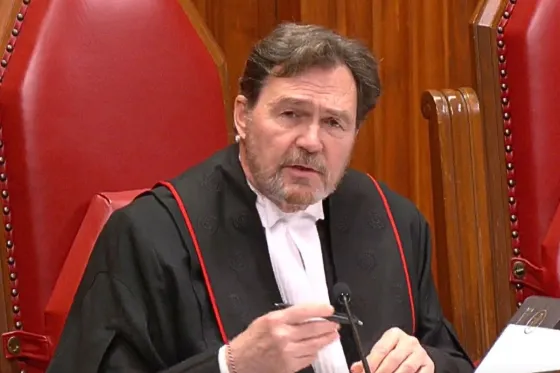
The Supreme Court of Canada heard arguments Wednesday over whether Quebec’s Bill 21 violates minority-language rights, with federal and provincial governments divided over the scope of the notwithstanding clause.
The chief justice of the Supreme Court of Canada delivered a pointed rebuke to the anglophone rights group TALQ on Wednesday, suggesting that one of its arguments regarding Bill 21 is “almost outrageous.” Richard Wagner said a document TALQ submitted to the court as part of a challenge to Quebec’s secularism law suggests that the English-speaking minority in Quebec is more diverse than the French-speaking community. “I find those comments almost outrageous,” Wagner told lawyer Julius Grey, who was representing the coalition of organizations. Grey and TALQ later said Wagner appeared to have misread their position.
…
TALQ argues English schools should be exempt from the law because it infringes on Section 23 of the Canadian Charter of Rights and Freedoms, which protects minority-language education. TALQ’s 48-page document to the court does not compare diversity in the anglophone and francophone communities. It does note that the English-speaking community is “highly diverse, encompassing people from many cultural and religious backgrounds.”