

The problem with how Quebec decides who gets English services
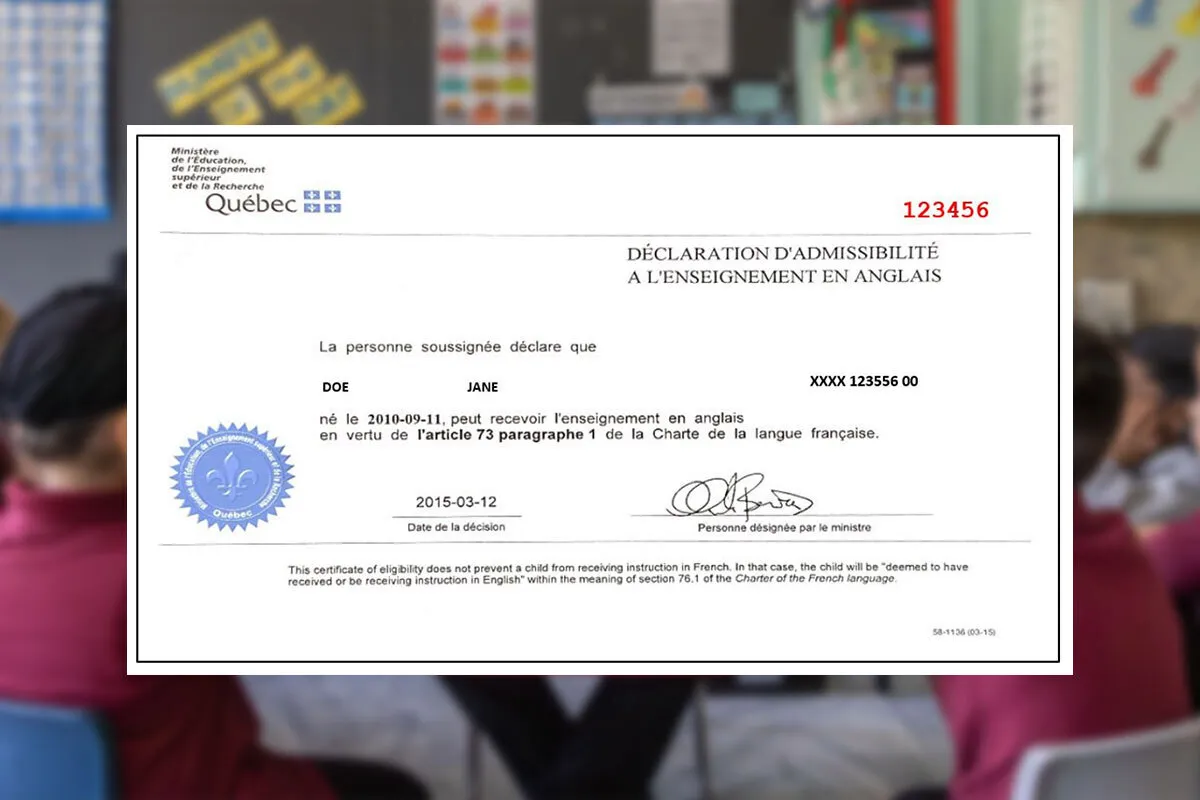
Critics say eligibility rules do not necessarily identify who speaks English or needs services in English.
A legal category created almost 50 years ago to determine who can attend English schools has become one of the main ways Quebec decides who qualifies for government services in English. But researchers, constitutional lawyers and language-rights advocates argue that eligibility for English schooling does not necessarily identify who speaks English, needs services in English or belongs to Quebec’s anglophone community.
“Number 1, it’s vague, and number 2, it’s impossible to properly implement,” said Michael Bergman, a constitutional lawyer involved in several legal battles over Quebec language laws. “It’s an imperfect fit with who needs the services in English and who the anglophone community actually is,” added historian Patrick Donovan of the Quebec English-Speaking Communities Research Network.
…
A note displayed on English-language government web pages states that “a supporting document is not currently required” if visitors declare they qualify for services in a language other than French. Bergman notes that the honour system is not set out in Bill 96 itself.
“This is the government saying as a matter of policy, we’ll accept that, but the government could change it,” he said. “It could be changed at any time.” Eva Ludvig of the anglophone-rights group TALQ said the wording leaves the door open to stricter requirements in the future.
“It depends on the government, depends on their policies, depends on who’s in charge,” she said.
“A lot of people feel this would be an imposition, that it would be undemocratic. In a democracy, you don’t walk around with an identity paper to get government services.”